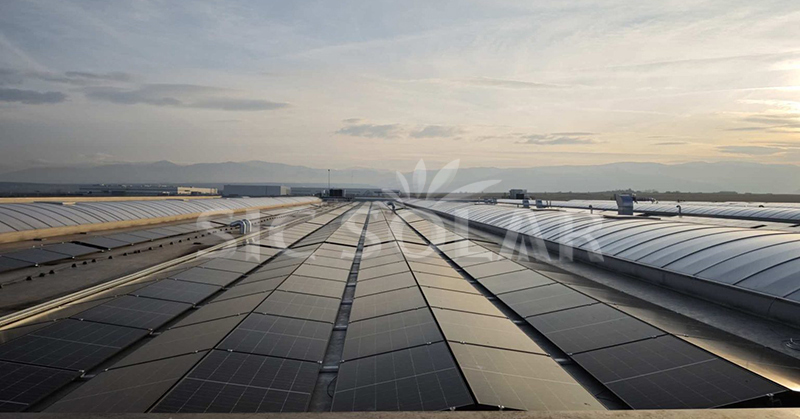

Designing a solar mounting system for a commercial roof requires careful planning to ensure safety, efficiency, and long-term performance. Unlike residential systems, commercial rooftop installations often involve larger areas, more complex layouts, and higher structural demands. A well-designed mounting system not only supports the solar panels but also protects the building and maximizes energy generation.

The first step in the design process is evaluating the roof type and condition. Commercial roofs are typically flat or low-slope, though some may have metal or membrane surfaces. Understanding the roof structure, materials, and load-bearing capacity is essential. Engineers must confirm that the building can support the additional weight of the solar panels, mounting system, and any ballast if used.
System layout and panel orientation are also key considerations. Designers need to determine the optimal tilt angle and spacing between rows to minimize shading and maximize sunlight exposure. On flat roofs, mounting systems are usually designed with a fixed tilt angle or adjustable structure. Proper spacing ensures that panels do not cast shadows on each other, especially during winter when the sun is lower.
Choosing the right mounting method is another critical step. For commercial roofs, there are generally two main options: ballasted systems and penetrating systems. Ballasted systems use weighted blocks to secure the structure without drilling into the roof, making them ideal for preserving waterproof layers. Penetrating systems, on the other hand, anchor directly to the roof structure and may be used when additional stability is required. The selection depends on factors such as roof strength, wind load, and local building codes.
Wind and environmental loads must be carefully analyzed during the design phase. Commercial rooftops are often exposed to strong winds, which can create uplift forces on solar panels. Engineers use calculations and simulations to ensure that the mounting system can withstand these forces. Proper anchoring, aerodynamic design, and load distribution all contribute to system stability.
Material selection is also important for long-term durability. Solar mounting systems are typically made from aluminum and stainless steel due to their corrosion resistance and strength. Since commercial systems are expected to operate for decades, using high-quality materials helps ensure consistent performance with minimal maintenance.
Cable management and electrical grounding should be integrated into the design. Proper cable routing prevents damage and keeps the system organized, while grounding ensures safety by protecting against electrical faults. These elements are essential for meeting safety standards and maintaining reliable operation.
Another important aspect is installation efficiency. Commercial projects often involve large-scale deployment, so the mounting system should be designed for quick and straightforward installation. Prefabricated components and modular designs can significantly reduce labor time and costs.
Manufacturers such as SIC Solar provide a variety of mounting solutions tailored for commercial rooftops. Their systems are designed to accommodate different roof types, offering options such as ballasted structures, adjustable tilt frames, and durable mounting components. By using compatible and well-engineered systems, installers can achieve both structural reliability and efficient installation.
Designing a solar mounting system for a commercial roof involves balancing structural safety, energy efficiency, and installation practicality. With proper planning, engineering analysis, and high-quality mounting components, commercial rooftop solar systems can deliver reliable performance and long-term value.